

Types of hearing loss explained
Hearing loss falls into four types, depending on which part of the ear is affected, and each type is managed differently.
5.017 Google reviews
Hearing loss
At a glance
Conductive loss is often medically treatable, sensorineural loss is permanent but can be managed, mixed loss is both together, and neural loss needs a specialist. A hearing test tells you which one you have.
The ear
How hearing works
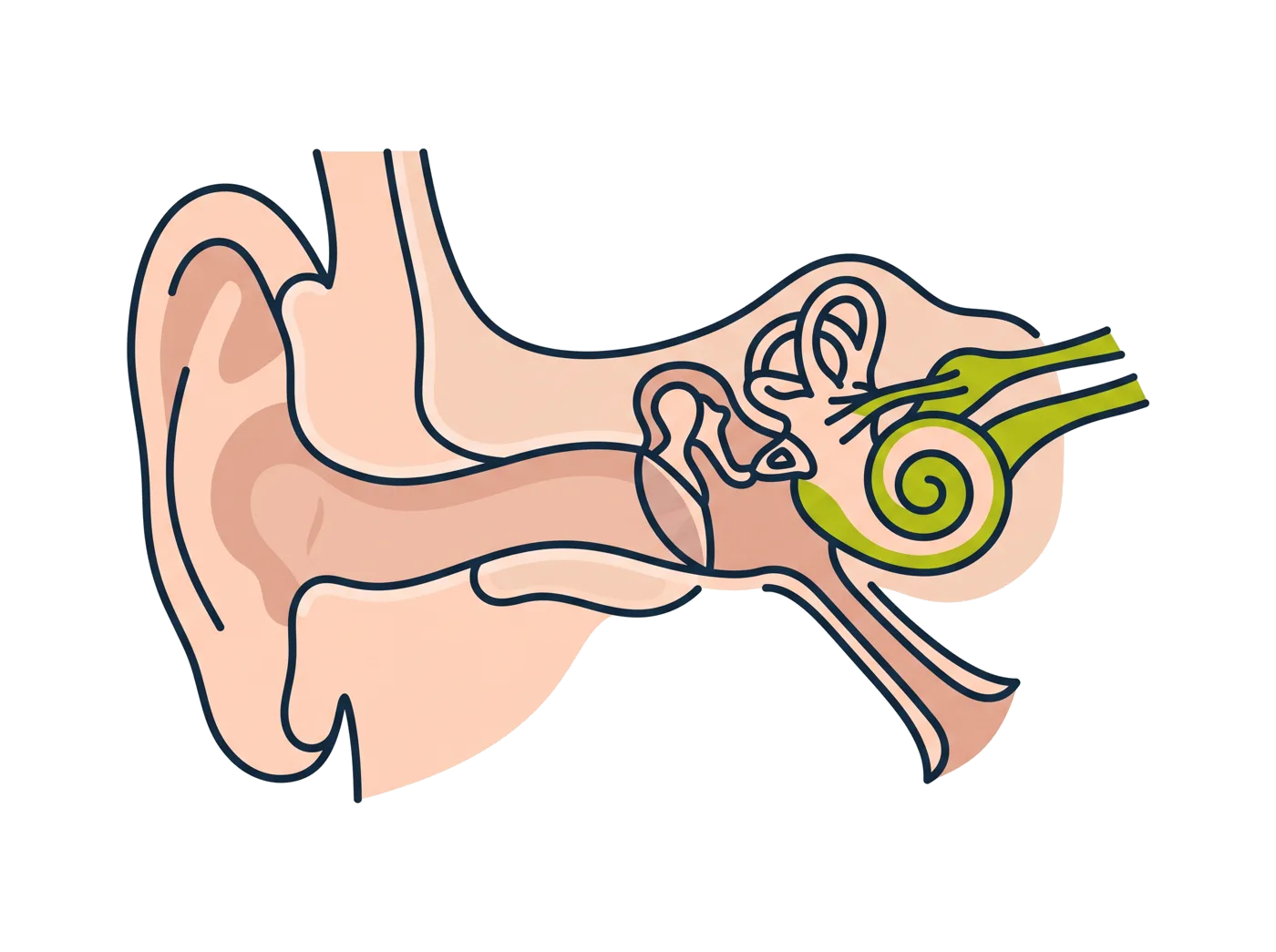
Sound is collected by the outer ear and travels down the ear canal to the eardrum, which vibrates.
Three small bones behind it, called the ossicles, carry that vibration inwards to the cochlea.
The cochlea is a fluid-filled spiral lined with tiny hair cells. The fluid moves, the hair cells bend, and that movement becomes a nerve signal. Different areas of the cochlea respond to different pitches, which is why hearing loss usually affects some sounds before others rather than turning the volume down evenly.
The auditory nerve carries that signal to the auditory cortex. This part of the brain turns it into sounds you recognise, such as speech, music or a warning.
Each stage can cause a different kind of hearing loss, with different treatment.
The four types
The four types of hearing loss
Affects: Outer and middle ear
Conductive hearing loss
Anything in the outer or middle ear that stops sound being conducted properly causes conductive hearing loss. Common causes include wax, fluid, a perforated eardrum and problems with the ossicles.
These losses are usually mild or moderate, and they are often treatable. Where that is the case you would be referred to an ear, nose and throat specialist for medical investigation rather than fitted with a device.
This type is worth ruling out first, because it can sometimes be treated medically.
Warning signs
When to see a doctor straight away
Sudden hearing loss
If you lose hearing suddenly, in one ear or both, do not wait. See a doctor as quickly as you can. Early treatment can sometimes reverse a sudden loss, and a hearing test shows what kind of loss it is. Urgent appointments are kept free at the clinic every day; when you call, describe your symptoms and any medical conditions you have.
Other signs
Other signs need a medical review too. They include hearing loss in one ear, or more in one ear than the other, and tinnitus that does not go away. Dizziness or vertigo, ear pain, discharge from the ear, repeated ear infections and any noticeable change in your hearing should also be checked.
What we do
Where a test shows one of these, the clinicians refer you promptly to your GP, an ear, nose and throat specialist or another health provider. They explain your results in plain language and give you written information to take home.
The research
Hearing and memory
Research links hearing loss with memory and thinking. The ACHIEVE trial (The Lancet, 2023) found hearing aids did not slow memory decline across all the older adults studied. In a smaller group already at higher risk, decline was 48 per cent slower over three years.

Following speech in a noisy room takes mental effort, and that effort can leave you tired.
Testing
Why it is worth testing early

Untreated hearing loss is linked with loneliness and low mood, and it affects the people around you too.

A hearing test gives you a record of where your hearing is now, so any later change can be measured against it.
Who you will see
The clinicians who test your hearing
Chris van Wijngaarden and Dayle Hensman see patients at the clinic.

Director, Senior Clinician & Certified Lyric Provider
Chris van Wijngaarden
Dip. Audiometry · Member of the Australian College of Audiology (ACAud), incorporating HAASA
Read Chris's profile
Senior Audiologist & Certified Lyric Provider
Dayle Hensman
BA Speech Pathology & Audiology · MAudA CCP
Read Dayle's profile
Conductive loss comes from a problem in the outer or middle ear and is often treatable. Sensorineural loss comes from damaged hair cells in the cochlea and is permanent but manageable. Mixed loss is both at once, and neural loss, from damage to the auditory nerve, is rare.
Conductive hearing loss often can be, because it is usually caused by something physical that can be treated. Sensorineural hearing loss cannot be reversed at present. Hearing aids programmed to your hearing test results can help, and how much varies from person to person.
Research links hearing loss with memory and thinking. The ACHIEVE trial (The Lancet, 2023) found hearing aids did not slow memory decline across all the older adults studied. In a smaller group already at higher risk, decline was 48 per cent slower over three years.
See a doctor as quickly as you can, and do not wait to see whether it passes. Early treatment can sometimes reverse a sudden loss. A hearing test shows what kind of loss it is, and the clinic keeps urgent appointments free every day for it.
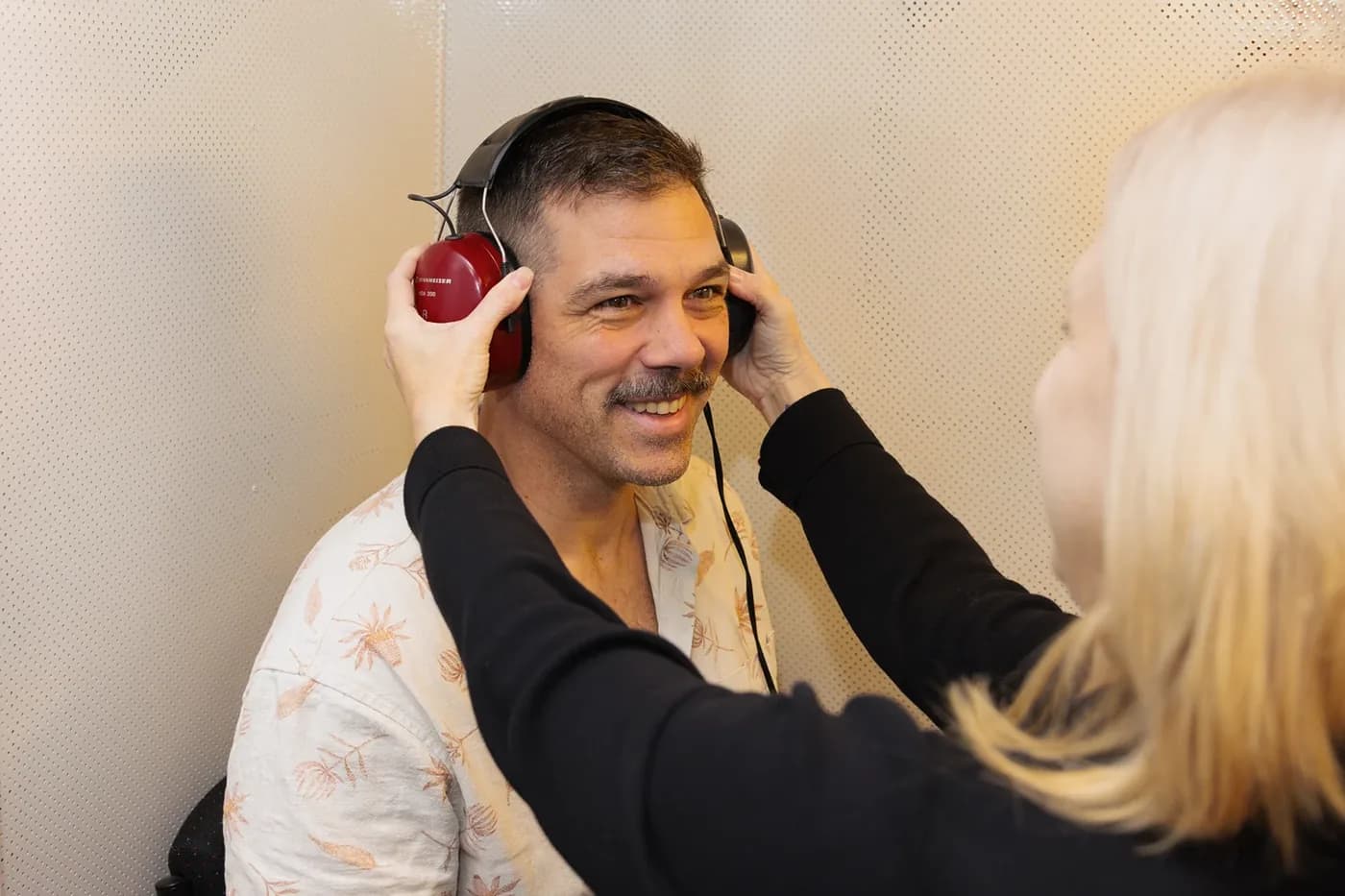
A full diagnostic hearing test tells you. It measures the quietest sounds you can hear and how clearly you understand speech, and the pattern of the results is what separates a conductive loss from a sensorineural one.
More from the clinic
Other services at the clinic

12questions, about a minute
Not sure whether you need a test?
The check asks twelve questions about situations people often find difficult, one at a time, in your browser. It takes about a minute, nothing is sent anywhere, and it is not a hearing test.
 369 Oxford StreetMount Hawthorn
Book
Book an appointment
Send an enquiry and reception will contact you by phone or email, or call the clinic to speak to someone now.
Opening hoursMonday to Friday 9am to 5pm, Saturday 9am to 12pm
Not sure yet? Take the online hearing check