
Tinnitus assessment in Perth
Specialist Hearing Services assesses tinnitus, a ringing, buzzing or humming that nobody else can hear, at our Mount Hawthorn clinic in Perth. The assessment identifies the type of tinnitus and its likely cause, and gives you a plan for managing it.
5.017 Google reviews- ReferralTo your GP, or to an ear, nose and throat (ENT) specialist, when the assessment points to a medical cause
- 1.5 to 2 hoursFor a tinnitus assessment, including a full hearing test

What it is
What tinnitus sounds like
Tinnitus is hearing a sound that nothing outside you is making. There is no cure, so management focuses on making the sound less bothersome.
It is a symptom rather than a disease, it has several possible causes, and it sounds different for everyone.
- Ringing
- Buzzing
- Humming
- Roaring
- Whistling
Causes
Common causes of tinnitus
Every case is different, and more than one of these can be true at once. The assessment identifies which of these apply to you.

Hearing loss
Commonly linked with tinnitus, but not the only cause
Tinnitus has many possible causes, and reduced hearing is one of them. That is why every tinnitus assessment includes a full hearing assessment: it shows whether a hearing loss is part of the picture.

Noise exposure
Loud work, loud music, a single loud event
Exposure to loud noise is one cause of tinnitus, and it can be prevented. Noise damage to hearing is permanent, so protecting your ears matters.

Medical conditions and medication
Middle ear infections, some medicines and some illnesses
Some medications and some diseases cause tinnitus, and a middle ear infection can too. In a small proportion of cases tinnitus arises from a serious condition that needs medical or surgical treatment, which is why we start with an assessment.

Stress
Acute stress, and the cycle that follows
Acute stress can bring on tinnitus. The reverse also happens: chronic tinnitus interferes with sleep, concentration and relaxation, and that in turn makes the tinnitus harder to live with.
The questionnaires ask how the sound affects your sleep, concentration and work.
The assessment
What happens at the appointment
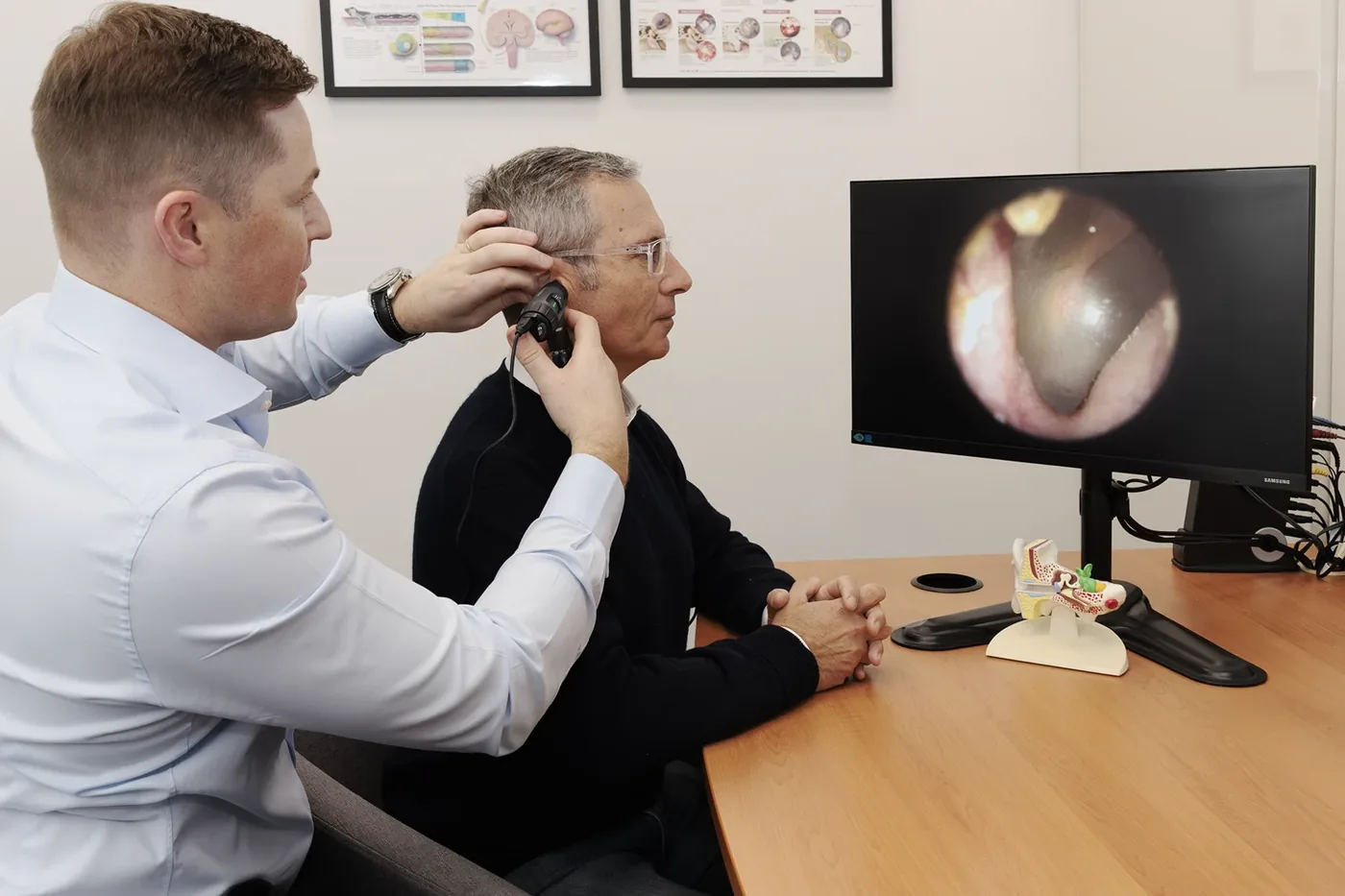
A tinnitus assessment answers three questions: whether a hearing loss is involved, whether anything needs medical attention, and how much the tinnitus affects your life.
- 1
You complete several questionnaires about the sound and how it affects your sleep, concentration and daily life.
- 2
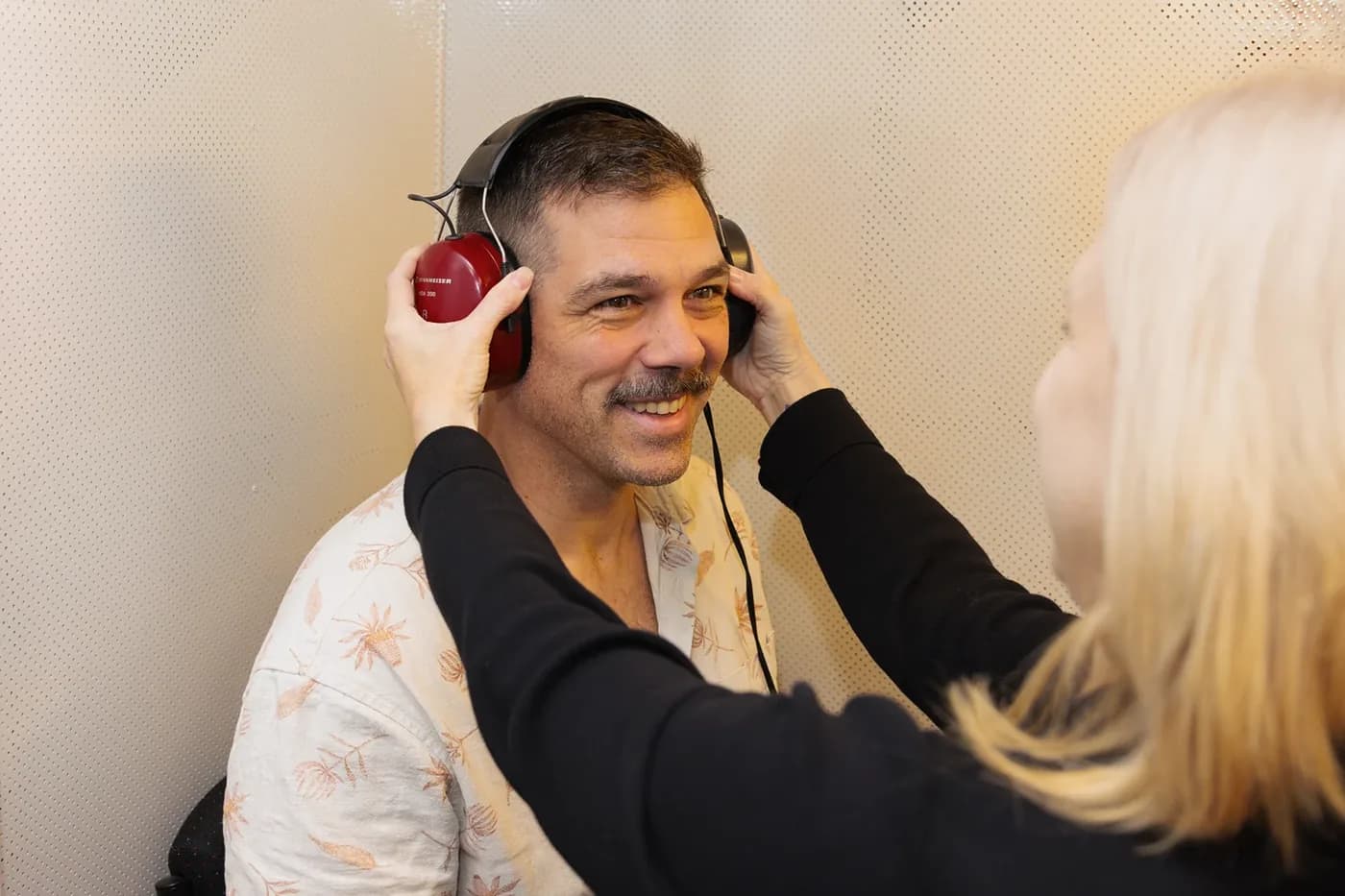
We carry out a full hearing assessment, because reduced hearing is one possible cause.
- 3
We explain what kind of tinnitus you have and where it probably started.
- 4
If anything needs further investigation, we refer you to your GP.
- 5
We give you a management plan based on what the assessment found.
Management
Managing tinnitus
The assessment is the basis for a management plan. Depending on what it finds, the plan can be one or more of these. Results vary from person to person.
Understanding what you hear
For some people, learning what their tinnitus is and where it probably started is enough to make it less worrying and easier to live with.
Worth knowing
This is part of every assessment, whatever else the plan includes.
Sound from hearing aids or other devices
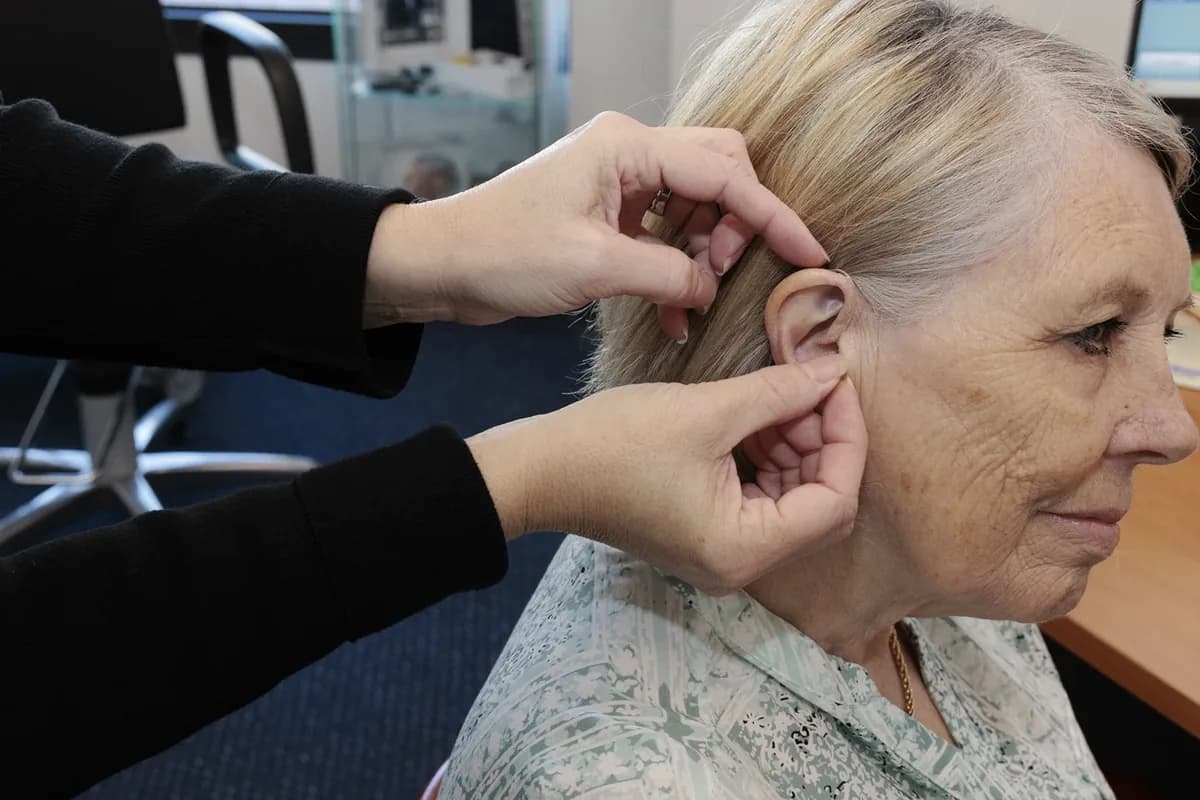
Hearing aids or other assistive listening devices can add sound that makes tinnitus less noticeable. Whether this helps you, and how much, varies from person to person.
Worth knowing
We discuss this after the assessment, once your hearing results are known.
A referral to your GP
If the assessment raises a medical question, we refer you to your GP for further investigation.
Worth knowing
Your GP can then arrange further tests or a specialist if they are needed.
If you are still exposed to loud noise, we can take impressions at the clinic for custom hearing protection.
Custom hearing protectionWho you will see
The clinicians who run the assessment
Chris van Wijngaarden and Dayle Hensman see patients at the clinic.

Director, Senior Clinician & Certified Lyric Provider
Chris van Wijngaarden
Dip. Audiometry · Member of the Australian College of Audiology (ACAud), incorporating HAASA
Read Chris's profile
Senior Audiologist & Certified Lyric Provider
Dayle Hensman
BA Speech Pathology & Audiology · MAudA CCP
Read Dayle's profile
No. Management aims to make the sound less bothersome. Where it is severe or long-lasting, the options are discussed once the assessment has shown what kind of tinnitus it is.
Yes. Reduced hearing is one possible cause of tinnitus, and the only way to know whether it plays a part in your tinnitus is to measure your hearing. The hearing assessment is part of the tinnitus assessment, not an extra appointment.
In a small proportion of cases tinnitus arises from a condition that needs medical or surgical treatment. Tinnitus in one ear only, tinnitus that pulses in time with your heartbeat, or tinnitus with sudden hearing loss or dizziness should be checked promptly. If you lose hearing suddenly, see a doctor straight away. Where the assessment raises a concern, we refer you to your GP or an ENT specialist.
It usually takes 1.5 to 2 hours. It includes several questionnaires and a full hearing assessment, and you leave with a plan for managing your tinnitus.
They can, when tinnitus comes with a hearing loss. Sound from hearing aids or other listening devices can make tinnitus less noticeable for some people. It is one of the options discussed after the assessment, and results vary.
More from the clinic
Other services at the clinic

12questions, about a minute
Not sure whether you need a test?
The check asks twelve questions about situations people often find difficult, one at a time, in your browser. It takes about a minute, nothing is sent anywhere, and it is not a hearing test.
 369 Oxford StreetMount Hawthorn
Book
Book an appointment
Send an enquiry and reception will contact you by phone or email, or call the clinic to speak to someone now.
Opening hoursMonday to Friday 9am to 5pm, Saturday 9am to 12pm
Not sure yet? Take the online hearing check